
Published · August 19, 2026
SPC Herringbone Flooring: The Complete Buyer's Guide
Herringbone is having a real moment again — designers keep pointing to it as one of the defining flooring patterns of 2026, and it's not a passing trend: the pattern has been used in wood, tile, and brick applications for centuries (House Digest). The problem is that a real herringbone parquet in solid or engineered wood is expensive to buy, sensitive to moisture, and slow to install. SPC herringbone solves that by putting the same interlocking pattern on a rigid, waterproof composite core.
This guide covers what SPC herringbone actually is, how to read the spec sheet before you buy, why it's almost always glued rather than clicked, and how to plan coverage and budget for a project — using our own Flex Herringbone collection as a worked example throughout.
Key Takeaways
- SPC herringbone combines a waterproof stone-plastic composite core with small, angled parquet-style planks, so it gets the herringbone look without wood's moisture sensitivity.
- Rigid-core products (SPC and WPC combined) accounted for roughly 58% of all resilient flooring sales in 2025, making it the dominant flooring category ahead of traditional vinyl (Floor Covering News).
- Because herringbone uses short, narrow planks, glue-down installation is standard — it locks every piece in place so the pattern doesn't shift or gap over time.
- Before buying, check wear layer thickness, wear class, and warranty terms against the room's traffic level, not just the surface photo.
What Is SPC Herringbone Flooring?
SPC stands for stone plastic composite — a rigid core made from limestone powder and PVC/stabilizers, topped with a printed decor layer and a clear wear layer. It's the same core technology behind most modern rigid-core vinyl planks, just cut and shaped into short parquet-style pieces instead of long rectangular boards.
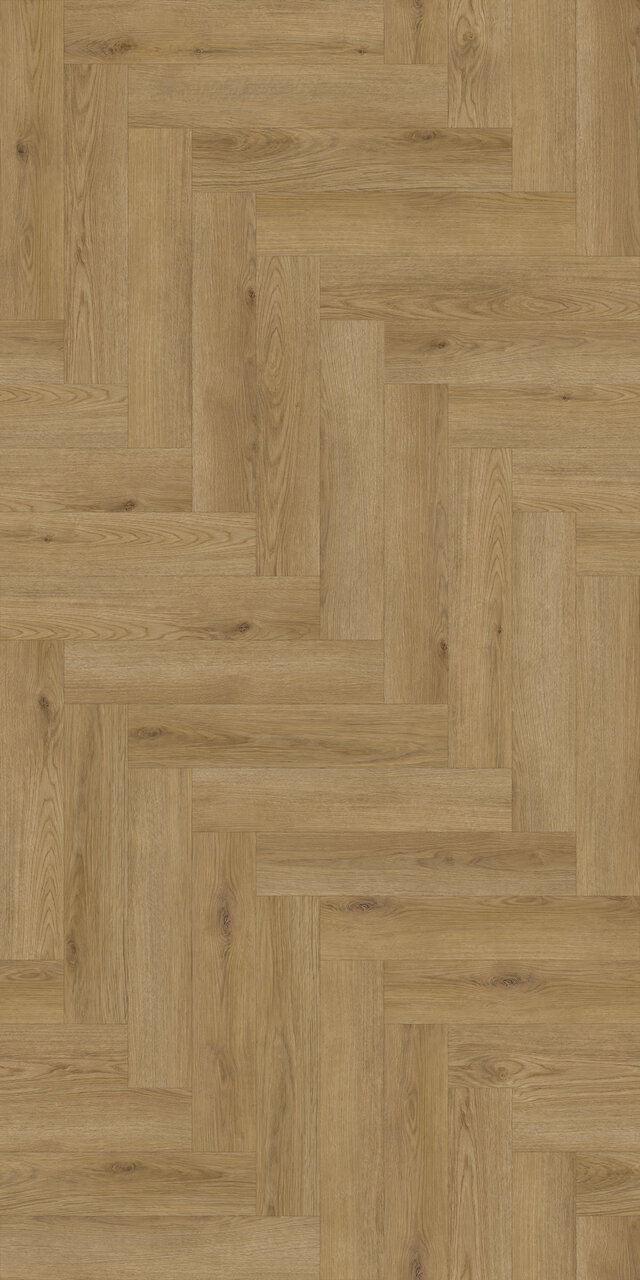
Herringbone is the laying pattern: rectangular planks set at 90-degree angles to each other so each row zigzags into the next, creating the classic V-shaped weave. Put the two together and you get a floor that looks like traditional wood parquet but is built on a fully waterproof, dimensionally stable core.
Why Choose SPC Over Wood for a Herringbone Floor?
A real wood herringbone floor needs to be site-finished or pre-finished with extreme care around seams, and it will still move with humidity — solid wood herringbone in a kitchen or near an entryway is a real risk. SPC removes that risk:
- Waterproof core. SPC doesn't swell, cup, or delaminate from moisture, so it's suitable for kitchens, entryways, and bathrooms — rooms where a wood herringbone floor would be a liability.
- Dimensional stability. Because the core doesn't expand and contract with humidity the way wood does, the small parquet pieces stay tight against each other, which matters more on herringbone than on any other layout because there are far more seams per square meter than with long-plank flooring.
- Consistent decor. Every plank is printed from the same digital file, so there's no color-matching risk between pieces the way there sometimes is with natural wood veneer.
- Lower installed cost. SPC herringbone typically costs less per square meter installed than a comparable engineered-wood herringbone, without requiring on-site sanding or finishing.
This isn't a niche category, either — rigid-core products (SPC and WPC combined) captured about 58% of total resilient flooring sales in 2025, ahead of traditional flexible vinyl (Floor Covering News). Herringbone-specific SPC is a smaller slice of that, but it rides the same underlying shift toward rigid, waterproof cores replacing both wood and standard vinyl.
Reading the Spec Sheet: What Actually Matters
Every SPC herringbone product looks similar in a marketing photo. The differences that determine how it performs are in the technical spec sheet. Here's what to check, using our Flex Herringbone collection as a concrete reference point:
| Spec | What it means | Flex Herringbone |
|---|---|---|
| Total thickness | Overall plank thickness, core + wear layer | 2.5mm |
| Wear layer | Clear protective layer on top — the main driver of scratch/scuff resistance | 0.55mm |
| Wear class | Commercial rating for foot-traffic durability (ISO 10874 scale) | 42 (heavy residential + general commercial) |
| Plank size | Individual piece dimensions | 122mm x 610mm |
| Installation | How it's fixed to the subfloor | Glue-down |
| Water resistance | Whether the core is waterproof | Waterproof |
| Bevel | Edge detail between planks | 4V |
| Coverage per box | Area one box covers | 2.828 m² |
| Residential warranty | Manufacturer coverage for home use | 25 years |
| Commercial warranty | Manufacturer coverage for commercial use | 5 years |
Two numbers matter more than the rest for a buying decision: wear layer and wear class. The wear layer is the physical thickness of clear film protecting the print — thicker generally means longer-lasting resistance to scuffs and scratches. Wear class is the independent durability rating; a 42 rating means the product is rated for heavy residential and general commercial foot traffic, not just light domestic use.
Why Herringbone Is Almost Always Glue-Down
If you've shopped for regular SPC planks before, you've probably seen click-lock (uniclic) systems that snap together without adhesive. Herringbone is different, and it's worth understanding why before you buy.
A standard plank floor has long, continuous seams running the length of the room, so a click system only needs to resist forces along those few long joints. A herringbone floor is made of hundreds of short planks, each one touching four or more neighbors at 90-degree angles. That's a huge number of short seams per square meter compared to standard plank flooring, and every one of them is a point where the pattern can shift, gap, or "walk" out of alignment if the planks aren't fully bonded to the subfloor.
Gluing every plank directly to a flat, prepared subfloor solves this: each piece is locked in place individually, so the geometric pattern stays true over the life of the floor. This is why our Flex Herringbone collection — like the large majority of SPC and engineered-wood herringbone products on the market — specifies full-spread glue-down installation rather than a click system.
Practical implications of glue-down installation:
- Subfloor prep matters more. The subfloor needs to be flat, clean, and dry before installation — imperfections telegraph through a glued floor more than a floating click floor.
- Installation takes longer. Full-spread adhesive plus a layout pattern is more labor-intensive than snapping long click planks together, so budget more installation time (or a professional installer) for herringbone versus standard plank SPC.
- It's the right tradeoff for the pattern. The extra installation effort is what keeps a herringbone floor looking sharp instead of loose or shifted five years in.
Where SPC Herringbone Works Best
Because it's waterproof and dimensionally stable, SPC herringbone is suitable in more rooms than wood parquet ever was:
- Kitchens and entryways — spaces where moisture and foot traffic rule out real wood herringbone
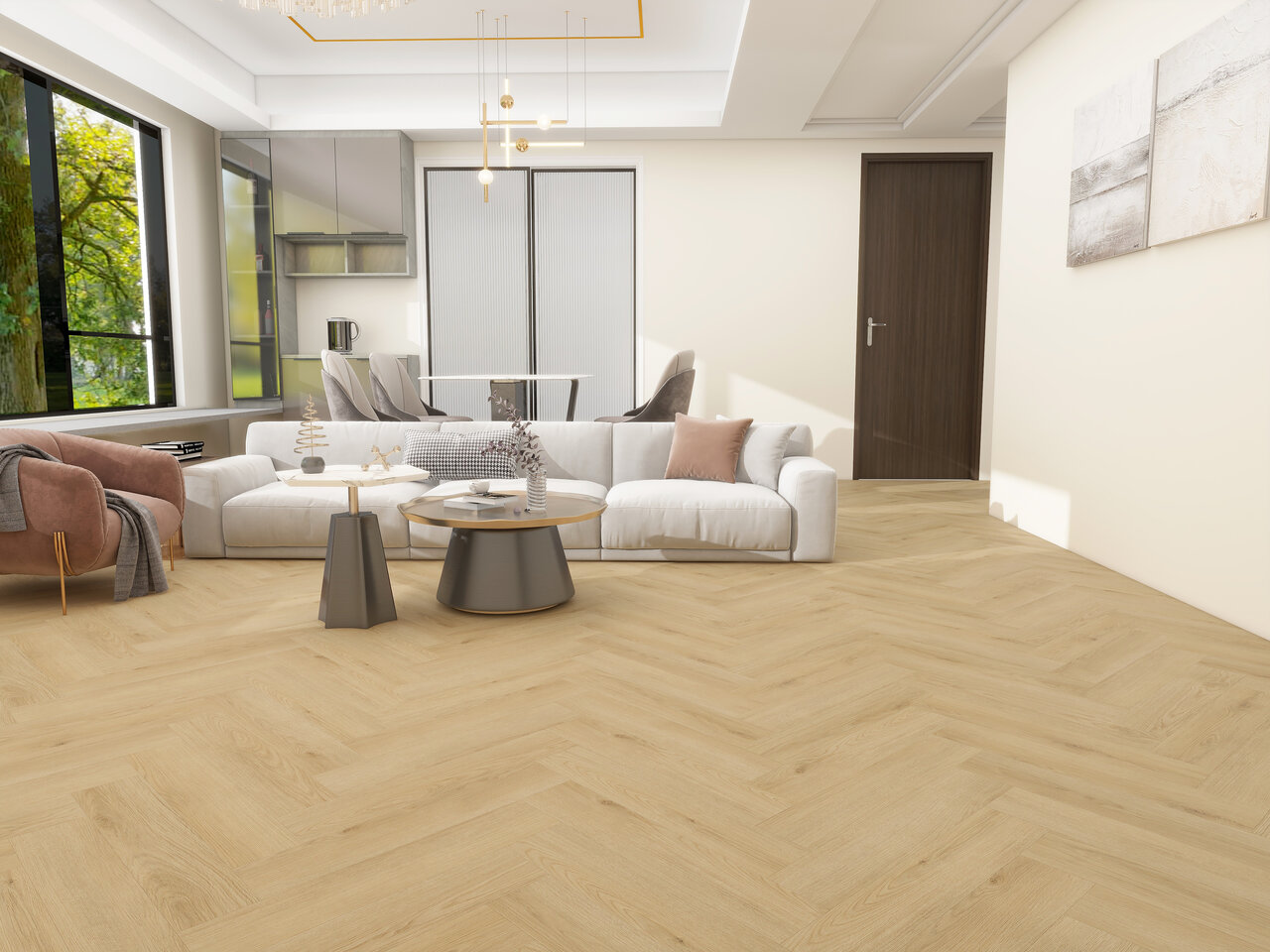
- Living and dining rooms — where the pattern's visual complexity works as a design statement
- Commercial spaces with a wear class of 42 or higher — boutique retail, hospitality, and office reception areas
- Rooms with underfloor heating — check the specific product's underfloor-heating compatibility rating before installing over a heated subfloor
It's a poor fit for large open industrial or warehouse-style commercial floors, where the labor cost of a pattern layout doesn't make sense — long-plank SPC is the better choice there.
Choosing a Decor and Planning Your Project
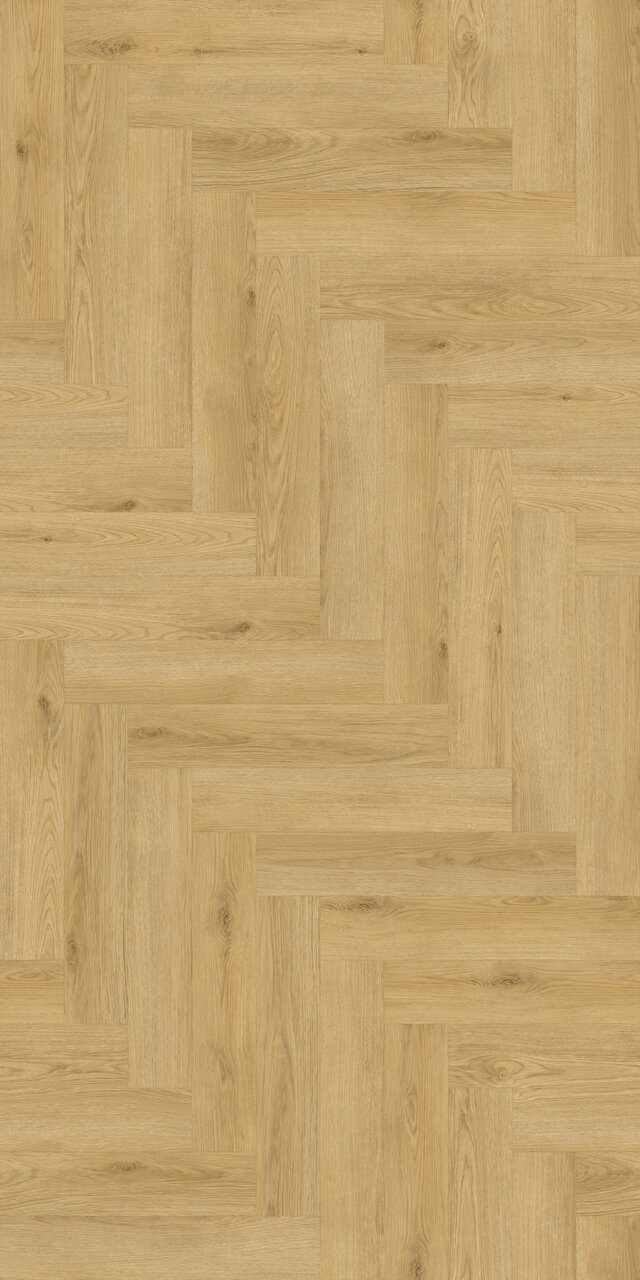
Once the technical spec fits the room, the decision comes down to color and grain. Herringbone reads differently than straight-laid flooring — the diagonal seams catch light from more angles, so a decor that looks subtle as a long plank can look considerably busier as herringbone, and vice versa. It's worth ordering physical samples and viewing them under the room's actual lighting before committing, especially for a floor with this many seams.
For coverage planning: at 2.828 m² per box (Flex Herringbone's coverage), measure the room's square footage, add roughly 10% for herringbone cutting waste — higher than the 5% typically budgeted for straight-plank layouts, because of the diagonal cuts at every wall and doorway — and round up to the next full box.
Browse the full Flex Herringbone collection to compare decors like Fremont, Dakota, Malden, and Lexington side by side, or see all collections if you're still deciding between a herringbone layout and standard plank SPC.
Maintenance and Care
SPC herringbone maintenance is the same as any rigid-core SPC floor:
- Sweep or vacuum regularly to keep grit from scratching the wear layer
- Damp-mop with a pH-neutral cleaner — avoid steam mops, which can affect the adhesive bond over time
- Use felt pads under furniture legs, especially at pivot points near the many short seams
- Wipe up spills promptly even though the floor is waterproof — standing water on any flooring should be addressed, and it keeps the surface finish looking new
Frequently Asked Questions
Is SPC herringbone flooring actually waterproof?
Yes — the SPC core itself is waterproof, and products like Flex Herringbone carry a waterproof rating on the full plank. Water resistance protects the floor structure; it doesn't mean water should be left standing indefinitely, since edge sealing at the glue lines still matters over the long term.
Can I install SPC herringbone myself?
It's more demanding than click-lock plank flooring. Full-spread glue-down installation with a pattern layout requires accurate subfloor prep and careful chalk-line work to keep the herringbone angles true. Many buyers use a professional installer for herringbone specifically, even if they've DIY-installed standard click SPC before. If your product is click-lock rather than glue-down, see our click-lock herringbone installation guide for the full step-by-step process.
How is SPC herringbone different from engineered-wood herringbone?
Both use the herringbone pattern, but SPC has a waterproof composite core instead of a wood veneer over plywood. SPC is more resistant to moisture and humidity swings, generally costs less installed, and carries a wear-layer warranty rather than a refinishing lifespan — engineered wood can be sanded and refinished a limited number of times, while SPC is replaced rather than refinished once the wear layer is worn through.
What wear class do I need for a residential kitchen?
A wear class of 42 or higher, like Flex Herringbone's rating, is suitable for heavy residential traffic including kitchens. Lower wear classes are intended for lighter-traffic rooms such as bedrooms.
Sources and Further Reading
- SPC Herringbone Trends: Goodbye to Basic Hardwood — House Digest, 2026 kitchen flooring trends
- Stats 2026: Rigid Core Products Continue to Dominate Sales — Floor Covering News, resilient flooring sales data
- ISO 10874:2009 — Resilient, Textile and Laminate Floor Coverings: Classification — the international standard behind wear-class ratings (supersedes the older EN 685)
- Flex Herringbone Technical Data Sheet — full spec sheet and test results for the product used as the reference example in this guide
Final Thoughts
SPC herringbone gives you the pattern that's defining flooring trends this year without wood's moisture and stability risks — provided you check the wear layer, wear class, and installation method against your room before buying, and budget the extra cutting waste and installation time that any pattern layout requires over straight planks.
If you're a distributor, retailer, or contractor sourcing SPC herringbone for a project, browse the Flex Herringbone collection for full specs and decor options, or get in touch to discuss volume pricing and samples. If you're deciding whether herringbone even belongs in your range alongside straight-plank stock, see herringbone vs. straight-plank flooring: which should you stock?